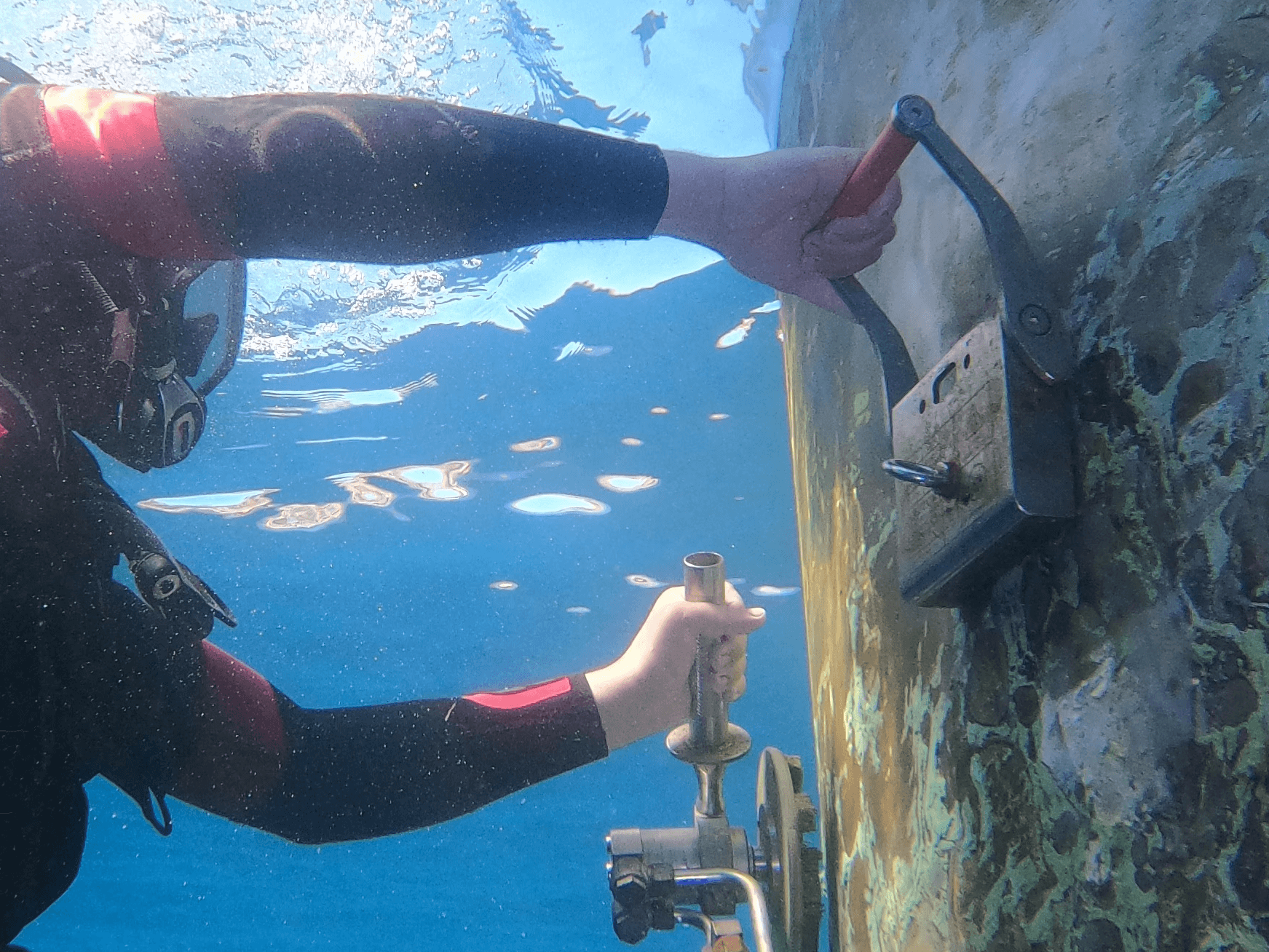
Let's begin with the physics. Don't worry – we'll keep it short. The electromagnetic force is one of the four fundamental forces of the universe, alongside the weak nuclear force, the strong nuclear force, and gravity. Electromagnetism arises when an electric charge (such as an electron or an ion) moves through space. It works both ways – if you apply an electromagnetic field to a charge, it will move.
Now you might be thinking "But Blumags are permanent underwater magnets, so why are they talking about electromagnets now?" Because the force at play is the same – the only difference is how it's generated. While electromagnets work by running a current through a wire, permanent magnets generate their force from the alignment of electron spins within the material.
Here's how it works: Atoms within a material contain electrons that spin and orbit the nucleus. Simply said, each electron is a tiny electromagnet. In most materials, the motions of the electrons are oriented randomly, so their magnetic effects cancel out. However, in certain materials, it's possible to align the electron spins and orbits so their magnetic effects combine and reinforce one another, creating a net magnetic field.
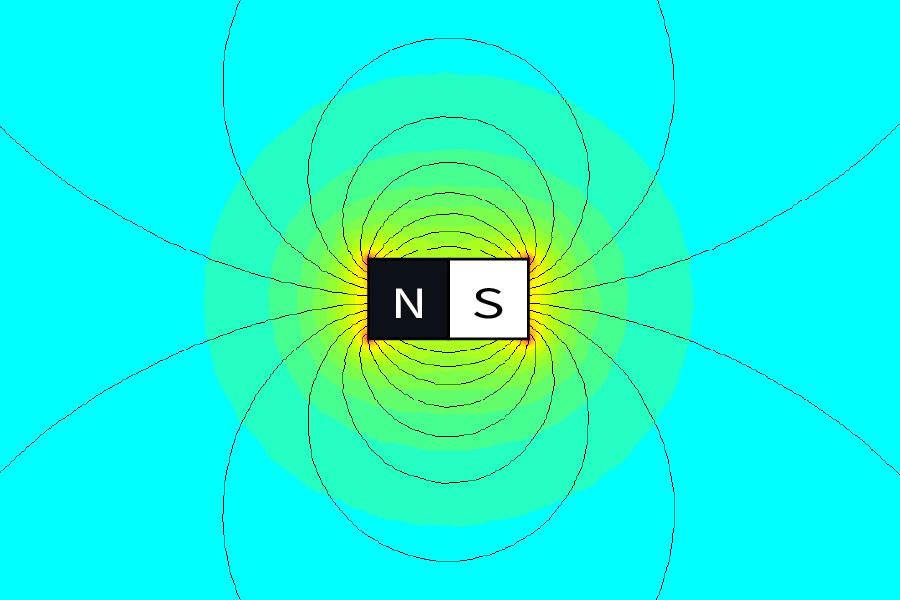 Magnetic field plot of a bar magnet
So how do you align the electrons' motions in a material? By applying a magnetic field from another magnet. Ferromagnetic materials, such as iron, nickel, and cobalt, will all respond this way. But the moment you turn off the external field, the electrons go back to normal as if nothing had happened.
A special subgroup of ferromagnetic materials, however, maintains the alignment of their electrons' spins and orbits even after the external field is removed. The amount of residual magnetism after the external field is removed is called retentivity. It takes a certain amount of reversed external field to demagnetize the material entirely. The amount needed is called coercivity. These properties – retentivity and coercivity – are what defines permanent magnets.
The technically correct denominations of these two types of materials are:
- Hard magnetic materials: Permanent magnets
- Soft magnetic materials: Iron, nickel, etc., which can be magnetized, but lose their magnetization if the source is removed
At Blumags, we use the same material in all our underwater magnets: neodymium. This is because neodymium magnets (or NdFeB as a metallurgist would spell it), have the highest retentivity and coercivity available, making them the strongest option for permanent magnets.